On October 13, 4:30 PM, Kaunas Photography Gallery will host a public lecture by Rein Jelle Terpstra, an artist living and working in Amsterdam, Netherlands, during which the author will present his creative projects and research. The public lecture will be held in English. Terpstra analyzes the roles of photography in art and society and is interested in the relationship between visual perception and collective memory.
Terpstra analyzes the roles of photography in art and society and is interested in the relationship between visual perception and collective memory. His work lies between documentary and interpretation, between what is visible and what remains only in memory. The artist creates films, installations, and books, and his works are held in collections such as the San Francisco MoMA, the New York MoMA library, the Netherlands Photo Museum, and others.
R. J. Terpstra teaches visual arts, film, and photography at the Minerva Art Academy of the Hanze University of Applied Sciences in Groningen, the Netherlands. During his visit, the artist will also teach an intensive course, “Extended Photography,” to students in the Vytautas Magnus University Intermedia Art Master’s program.
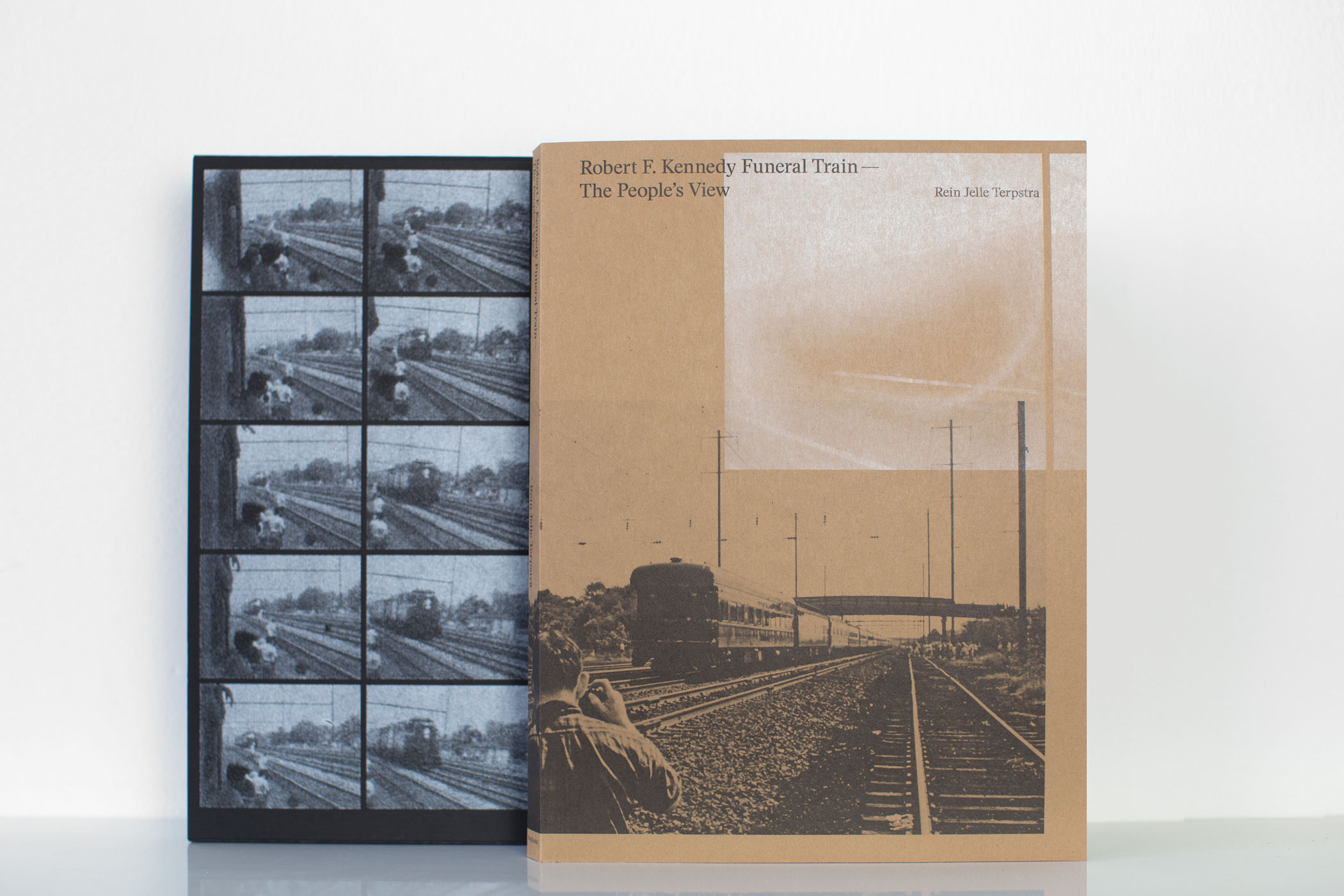
Dutch artist Rein Jelle Terpstra is best known for his project Robert F. Kennedy Funeral Train – The People’s View, which challenges the traditional approach to historical documentation. In 1968, after the assassination of Robert F. Kennedy, a funeral train traveled across the United States, photographed by thousands of people standing on roadsides, bridges, and railroad tracks. Terpstra reconstructs this journey not through official media footage, but through the photographs of these random witnesses, recreating not the icon of a hero, but the fabric of collective memory. Instead of the train, there are people looking at the train; instead of a single story, there are hundreds of fragments scattered across time and space.
It is a poetic and at the same time political gesture: memory here functions as a multitude of small, contradictory eyes. Terpstra does not so much reconstruct the event as create a visual democracy in which each witness becomes a co-author of history. In his work, photography is no longer evidence—it becomes a space for reflection, where what matters most is not what we see, but how we remember.
Terpstra’s other projects—Photographs of the Photo Archive, Retracing, Dark Dunes—develop the same theme: how memory manifests itself through images that disappear, change, or never fully materialize. His artistic language combines archival research, conceptual thinking, and sensitive visual minimalism, in which time becomes both the material and the subject of the work.
R. J. Terpstra’s visit is partially funded by the Education Exchange Support Fund.