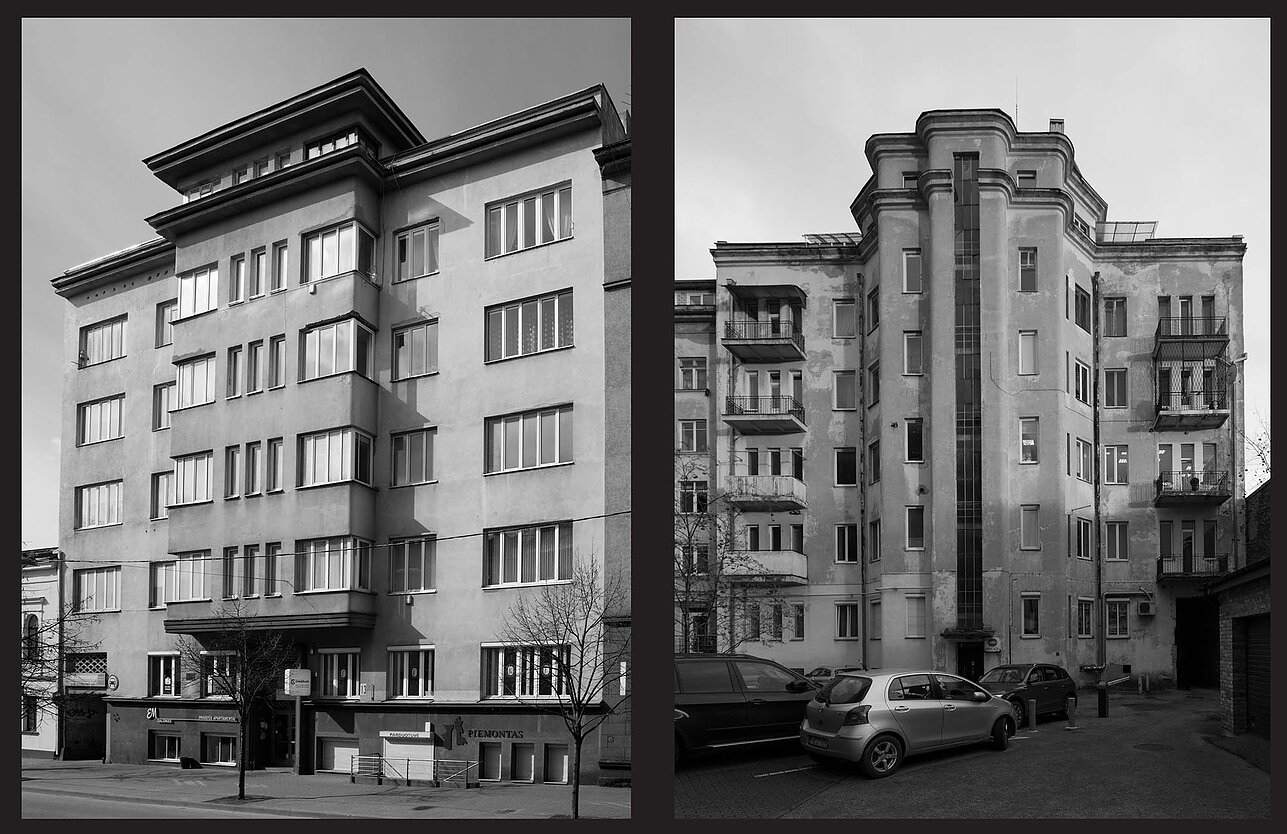
From 22 November to 12 December, Gintaras Česonis’ exhibition “Inspirations. Modernism” is open at Kaunas Photography Gallery.
According to design and architecture researcher Jūratė Tutlytė, “In the photographs presented in this exhibition, Gintaras Česonis stops the flow of everyday time, creating an atmosphere of meditative calm, in which the body of modernist architecture unexpectedly disguises itself. The silence of the images awakens. Buildings seen hundreds of times shed the noise of everyday life and burst into full beauty. They appear as they have never appeared before. These are portraits of buildings in their own right, with a carefully chosen angle of view to best convey the character of the subject, a special drop of light so that the relationship between the whole and the details resonates in the highest key. But without powder and artificial retouching. Just a penetrating glow that speaks to the depths of the architecture in the silence of inner peace.”
In the photographic publication “The Modernity of Rear Facades” by Gintaras Česonis, architectural historian Vaidas Petrulis says: “The 1930s brought the explosion of the architectural revolution of modernism, which inspired a new approach to space, forms and the environment of everyday life. Inspired by universal ideas, modernist architecture took on a distinctive local spirit in each city. <…> Kaunas modernist architecture is the story of a change in the hierarchy of forms. The parade façade, which for centuries had served as a representation, became one of the equal elements of the building. The space of the rear façade, previously considered the “invisible” part of the city, took on a new, authentic meaning in the modernist era. <…> Paradoxically, the true face of the modernist city is reflected not in the parade, but in the rear façades – a statement of utilitarianism, rationality and functionality.
In photography, this becomes an extremely eloquent theme. The rear façades tell the story of the city without decoration, but with all the aesthetics of everyday life. The silent servants’ staircases, the simple shapes and the shadows of imperfection are the true spirit of the city, which is impossible to fake. This contrast between the representational and the everyday is like the flip side of the Kaunas modernist coin – authentic, alive and enduring.”
The exhibition also includes the video projection “Travelling Modernism” (2024) by Aurimas Švedas and Gintaras Česonis, which previously travelled through outdoor spaces and is now being shown for the first time in the gallery.
The exhibition is supported in part by the Lithuanian Council for Culture and Kaunas City Municipality. Patronage of Kaunas Photography Gallery – AON.