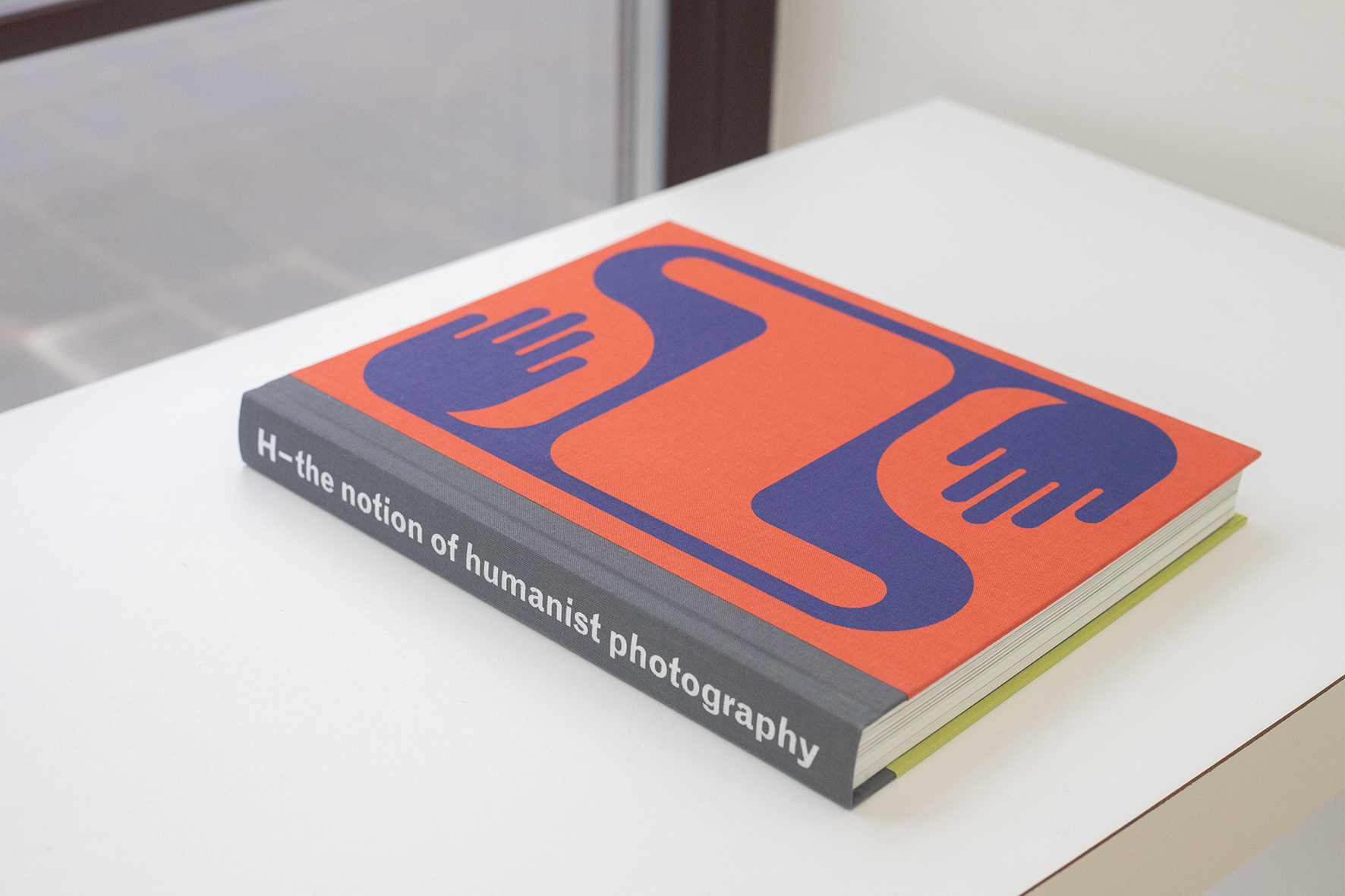
Almost a year ago, two European cultural institutions, the Kaunas Photography Gallery in Lithuania and the Centre national de l’audiovisuel (CNA) in Dudelange, Luxembourg, joined forces to create an innovative project that brought together a group of artistic practitioners to explore the notion of humanistic photography. Twenty-three artists, four authors, three mentors and one designer have been invited to participate in this international project which resulted in a magazine-like trilingual publication entitled ‘H – The Notion of Humanist Photography’. The launch of the book will take place on Tuesday, February 28, at 6 pm. During the book launch at the Kaunas Photography Gallery, Ieva Baltaduonytė, Kseniya Halubovich, Tadas Kazakevičius, Bruno Oliveira and Artūras Morozovas will present their artistic projects published in the book. The event will be held in English and will be free of charge.
Justė Litinskaitė, one of the editors of the book, says that the strength of ‘H’ is its multilingualism. ‘The aim of ‘H’ was to explore contemporary humanist photography and together with a group of talented international artists look for different ways of talking about human beings. Not only did the artistic language of the photographers who contributed to the publication differ, but so did the themes they chose to explore. The publication contains compelling photographic narratives about the war in Ukraine, refugee crises, feminist self-consciousness, the LGBTAQ+ community, homelessness, the search for love on online dating apps, disappearing professions and other signs of being human today.’ – she says.
The preparation of the publication took form of two separate, one-week residency workshops, held in Kaunas and in Dudelange, with the participants divided between them. The workshop in Kaunas was led by an American artist and photographer Jim Goldberg, while the workshop in Dudelange was led by Director of Photography at the FT weekend Magazine and a curator Emma Bowkett and the editor of an ‘alternative newspaper’ Hot Potato. ‘Many of the artists invited to take part in the project did not identify themselves with humanist photography. Each of them sees the world in their own way. However, we all agreed at the beginning of the creative process that it is possible to talk about human beings by depicting more than just them.’ – observes Justė Litinskaitė. The workshops provided a forum for an exchange of ideas and discussion about the artists’ own work and how it relates to the human predicament in today’s world. The themes the artists covered grew and developed from the discussion within each group with the additional involvement of critics and curators; the collections and cultural networks of the Kaunas Photography Gallery and the CNA were available as research facilities.
‘The ‘H’ follows the logic of a conversation. The publication features the work of 24 photographers – Ieva Baltaduonytė, Máté Bartha, Laurianne Bixhain, Marie Capesius, Sébastien Cuvelier, Ankita Das, Patrick Galbats, Jim Goldberg, Kata Geibl, Karolina Gembara, Anne-Sophie Guillet, Kseniya Haulubovich, Tadas Kazakevičius, Geistė Kinčinaitytė, Massao Mascaro, Artūras Morozovas, Bruno Oliveira, Agnieszka Sejud, Marie Smith, Anne Speltz, Indrė Urbonaitė, Severina Venckutė, Karolina Wojtas and Ana Zibelnik. It also contains the essays on the classical and contemporary humanist photography by art historians Taous R. Dahmani, Margarita Matulytė and Adam Mazur and artist Michael Baers. The photographers and the authors of the texts are in dialogue with each other, exchanging ideas, contradicting and complementing each other. The publication is therefore not limited to a single overarching mindset or position. It aims to explore humanism in photography from the varied facets of the phenomenon.’ – explains Justė Litinskaitė.
Designed by a Swiss photographer, graphic designer and editor Nicolas Polli, the book also features several archival photographs by Irena Giedraitienė, Aleksandras Macijauskas, Romualdas Požerskis, Antanas Sutkus, Algirdas Šeškaus, Virgilijus Šonta, Rimaldas Vikšraitis and Jeff Weber. Some of the artistic statemnts were written by professional writters Hugo Amour, Sofia Eliza Bouratsis, Chloe Chignell, Ana Filipa Martins, Camille Moreau, Annija Muižule, Nandini Tripathy and Aistis Žekevičius.
Read more about the publication here.
The project was supported by ‘Kaunas 2022’, ‘Esch 2022’, Lithuanian Council for Culture, Luxembourg Ministry of Culture.