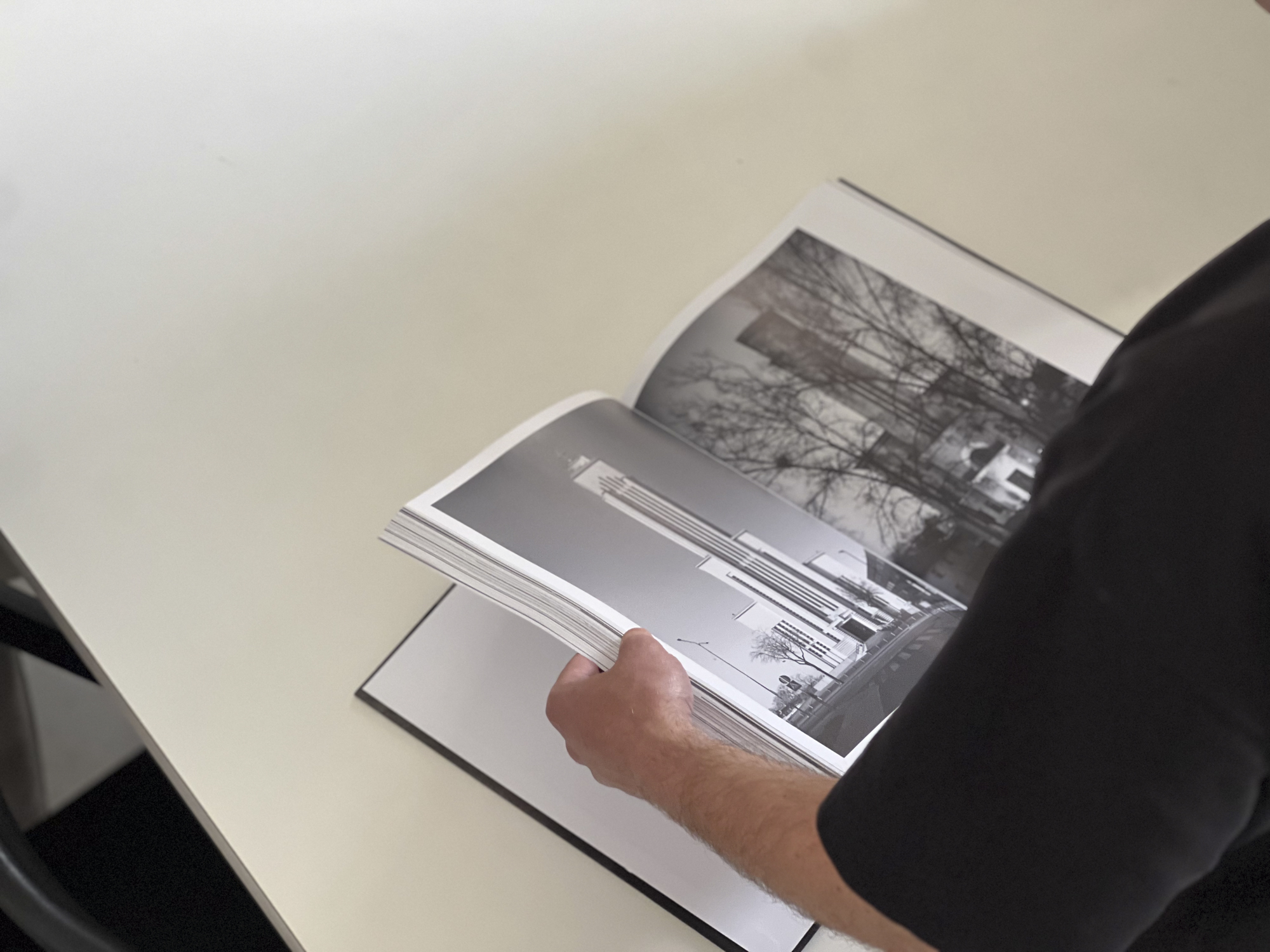
On the afternoon of 25 June, the loft of the Lithuanian Association of Architects hosted a welcome party for a new publication “Kaunas. The city of modernism”. It seems that one can never pay too much attention to a city that has already been inscribed on the UNESCO World Cultural Heritage List. But this time it is not an encyclopaedic look or an academic treatise. It is a visual ode, an album dedicated to Kaunas’ golden age of architecture – interwar modernism, observed and highlighted in its own way by the photographs of Gintaras Česonis.
The city is not a background, not an object. The city is a process. The album becomes not a document, but a compelling narrative form of the Kaunas that seems to be familiar, but is still not fully read. The signs of modernisation are revealed in the eloquent facades, the rhythmic street layouts, the logic of the compositions, the lines of the forms and the dramaturgy of the pauses.
This is an eloquent photographic portrait of the urban body. Like an architectural nude – delicately rendered, sensitively exposed, a drama of the tension of the gaze and the drama of the light. Although the publication is supplemented with texts by architectural historians – Marija Drėmaitė, Vaidas Petrulis, Žilvinas Rinkšelis – it is not a guidebook, but rather a fragmented narrative in which the essentials are discovered unexpectedly. Like the voices of a fugue – recurring, silent, reappearing.
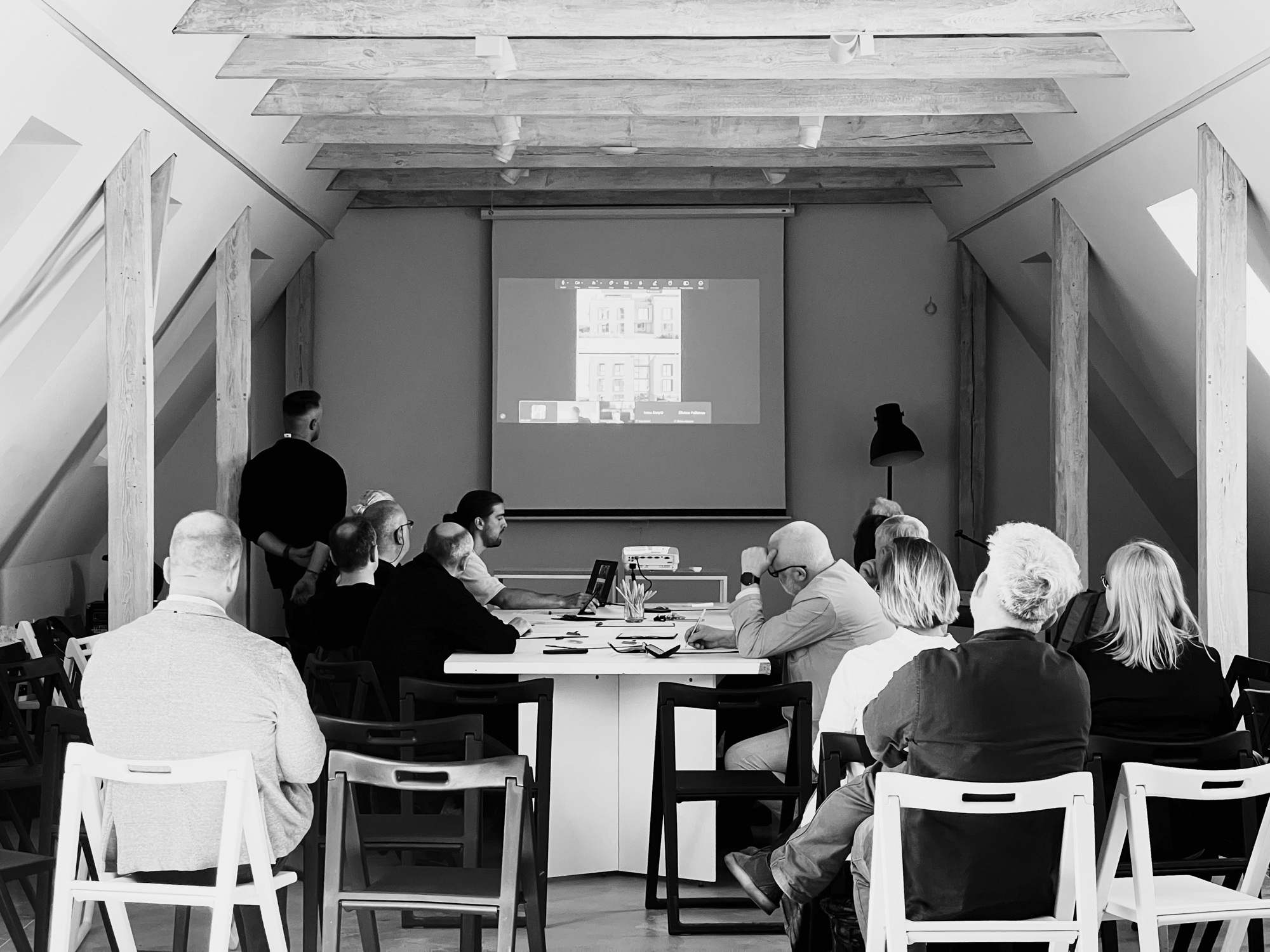
As Jūratė Tutlytė, the compiler of the publication, states:
“The nail in the coffin of the publication’s structure is the visual narrative through the similarity, repetition, and sometimes even opposition of architectural elements. In this way, buildings that are really far apart from each other in nature, but which resonate in the same architectural rhythm, are juxtaposed. This is likely to confuse and confound the reader, perhaps even to draw him or her into a kind of game of search and identification. But it is precisely this juxtaposition that allows the patterns of architectural expression to emerge. A keen-eyed reader will recognise this – and maybe even be surprised.”
The initiators of the publication are the Kaunas branch of the Lithuanian Association of Architects and Kaunas Photography Gallery.
The project is funded by the Lithuanian Council for Culture and Kaunas City Municipality.